







The Immediate Danger of Running a Failing AC During a Heat Wave
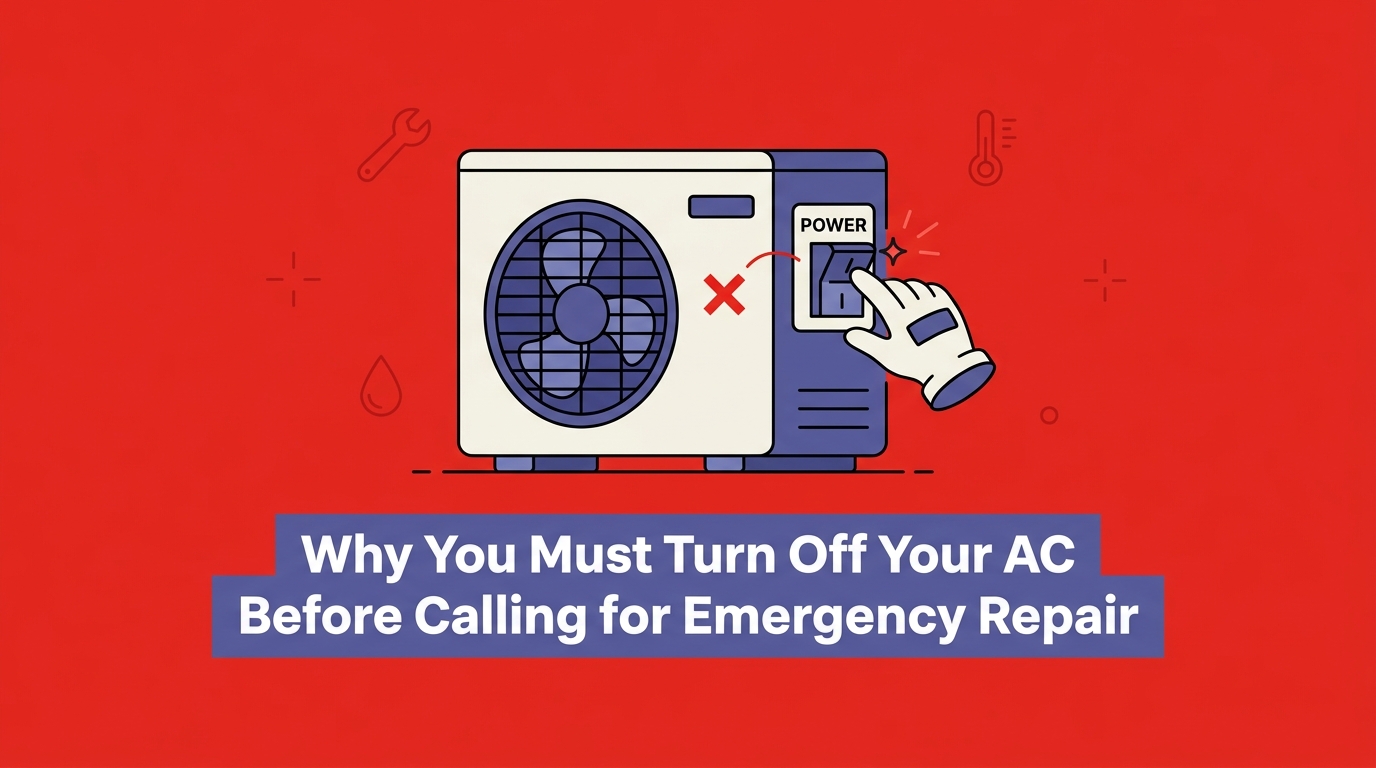
Summer is rapidly approaching, and as you look up home maintenance tips and troubleshooting, there is one critical rule our team at Efficiency Heating & Cooling wants every homeowner to know: if your air conditioner is struggling to cool, turn it off immediately. It is incredibly tempting to leave a failing system running in the hope that it will eventually catch up and cool the house down. However, when you are dealing with a recurring refrigerant leak in an aging HVAC system, leaving the power on is the worst possible action you can take. Addressing this concrete problem promptly is essential, as the decision point quickly becomes whether you can simply repair an older system or if the resulting degradation will force a complete replacement.
When you encounter this issue, the smartest move is to shut down the thermostat and seek a professional evaluation. In our years of providing comprehensive air conditioning services, including expert AC repair in Saskatoon, we have found that having a qualified technician assess the damage early is the only way to prevent irreversible breakdowns.
During the peak summer cooling months, we have seen firsthand how quickly Saskatoon experiences rapid indoor heat gain. This intense, fast-rising temperature often makes homeowners deeply reluctant to turn off a struggling air conditioner right when they feel they need it most. The house gets hot quickly, and the instinct is to keep the air moving. Unfortunately, this understandable reaction directly threatens the most expensive component in your entire HVAC setup: the compressor. When an aging system is starved of the chemical it needs to function, asking it to fight against severe heat gain is a recipe for catastrophic mechanical failure.
The Hidden Role of Refrigerant in Compressor Health
Most people understand that refrigerant is the substance responsible for cooling the indoor air. However, our technicians always remind customers that it serves a secondary, equally vital function: it is directly responsible for cooling the compressor motor itself. To understand why this matters, you have to look at the mechanics of vapor-compression refrigeration cycles. In a healthy system, warm gas travels from your indoor evaporator coil out to the compressor. Because this gas has absorbed heat from your home, it must be compressed into a high-pressure, high-temperature state so the outdoor condenser fan can blow that heat away.
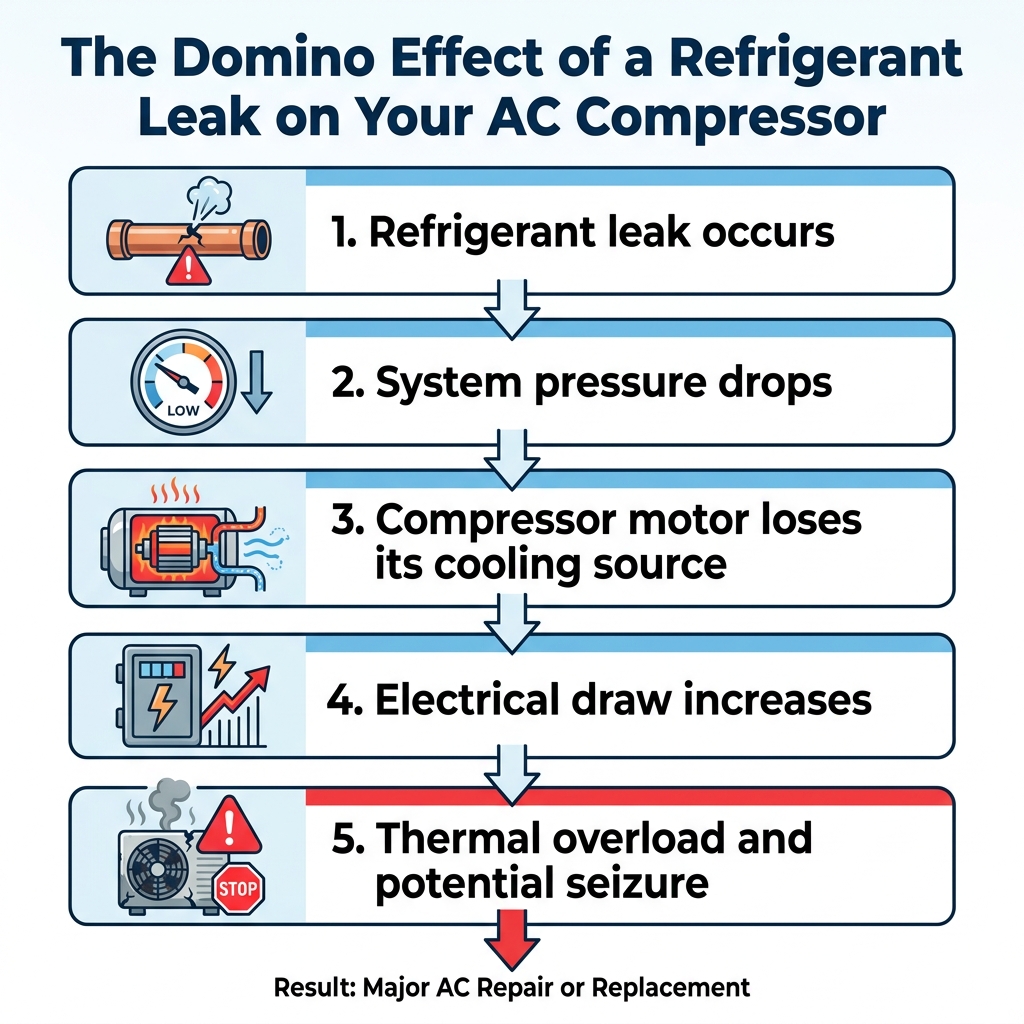
When refrigerant pressure levels drop due to a leak, the volume of cool gas returning to the outdoor unit decreases drastically. The compressor motor relies on that returning flow of gas to shed its own operational heat. Without it, the motor begins to bake. A drop in pressure forces the compressor to overwork, running longer cycles to try and achieve the temperature set on the thermostat. Running the system in this compromised state quickly escalates what might have been a straightforward, repairable leak into a scenario that requires a forced system replacement.
How Low Pressure Triggers Thermal Overload
The relationship between low refrigerant volume and increased electrical draw is a destructive cycle. When there is not enough refrigerant to move heat effectively, the compressor has to pump harder and run continuously. This constant strain causes the electrical components to draw more amperage.
The thermal overload protector: Modern compressors are equipped with a built-in safety device called a thermal overload protector. This switch is designed to cut the power to the motor if it detects dangerous levels of heat or an excessive electrical draw. If you leave a leaking system running, this switch will trip, shutting the compressor down temporarily. However, if the thermostat is still calling for cooling, the system will try to restart as soon as it cools down, only to overheat and trip again. Eventually, this constant tripping destroys the overload protector and melts the internal windings of the motor.

Why Continuous Recharging Destroys Aging HVAC Systems
A common misconception in home maintenance is that air conditioning systems naturally "use up" or consume refrigerant over time. This is entirely false. Air conditioners operate on a closed-loop system. If the system is low on refrigerant, there is a leak that must be addressed. Simply "topping off" the system year after year is not a solution; as we often explain to our customers, it is a temporary bandage that masks a deteriorating infrastructure.
Continuous leaks in aging HVAC systems significantly degrade energy efficiency. Every time the system runs with suboptimal refrigerant pressure, it consumes more electricity to produce less cooling. During the peak summer cooling months, this constant high-load demand compounds system damage over time. The false economy of delaying a proper repair might save money on a single service visit, but it guarantees massively inflated utility bills and the eventual death of the entire condensing unit.
The Compounding Effect of Mechanical Degradation
Refrigerant does not travel through your system alone; it carries specialized compressor oil with it. This oil is essential for lubricating the moving metal parts inside the compressor. When a leak occurs, oil escapes right alongside the refrigerant gas.
• Loss of lubrication: As the oil level drops, metal-on-metal friction increases inside the compressor, creating microscopic metal shavings that contaminate the entire system.
• Exponential failure rate: Operating a compromised compressor under high thermal loads causes the failure rate to increase exponentially. What starts as minor wear quickly turns into severe internal scoring and eventual lock-up.
• Acid formation: Moisture entering the system through the leak can mix with the remaining oil and refrigerant to form highly corrosive acids, eating the system from the inside out.
Clear Indicators It's Time to Hit the Power Switch
Recognizing the signs of a failing system can save you from a catastrophic equipment breakdown. You do not need to be an HVAC technician to notice these symptoms, but you do need to act decisively when they appear. If you observe any of the following indicators, turn the system off at the thermostat immediately.
1. Blowing warm air: If the air coming from your vents feels lukewarm or completely unconditioned, the heat transfer process has failed. Continuing to run the fan will only circulate humidity and force the outdoor unit to overwork.
2. Ice buildup on the evaporator coil: Surprisingly, low refrigerant pressure levels cause the indoor coil to drop below freezing. Moisture in the air freezes to the coil, forming a solid block of ice that blocks airflow completely.
3. Unusual hissing or bubbling noises: These sounds often indicate a severe, active leak in the refrigerant lines. If you hear this near the indoor unit or the outdoor condenser, shut the power down.
4. Short cycling: If your system turns on for a minute or two and then abruptly shuts off, it is likely protecting itself. This phenomenon is a defense mechanism of a failing system. For a deeper dive into this specific issue, you can read more about why your AC keeps shutting off.
Listening to Your System's Warning Signs
Your ears are often the best diagnostic tool you have. A struggling compressor will produce distinct auditory cues, such as a loud buzzing sound, rattling, or a distinct "hard start" noise where the unit sounds like it is straining to turn over. Ignoring these signs leads directly to irreversible mechanical seizure. When the internal components warp from heat and friction, the compressor locks up permanently, leaving you with a massive repair bill.
The Repair vs. Replace Dilemma for Aging Systems
Once the system is safely turned off, you face a critical choice: do you repair the leak and recharge the system, or do you replace the aging unit entirely? Making this decision requires objective criteria, especially when dealing with older equipment during the peak summer cooling months. The age of the unit, the cost and availability of the specific type of refrigerant it uses, and the extent of existing compressor damage all factor heavily into this calculation.
During a recent summer heat wave, our team at Efficiency Heating & Cooling helped a local homeowner facing this exact dilemma when temperatures spiked to +30°C. Their older unit stopped cooling entirely. Rather than just blindly adding more refrigerant, our technician properly diagnosed the underlying structural issue, sourced a rare replacement part to fix the root cause, and fully tested the repaired system to restore optimal performance. This targeted approach prevents the endless cycle of topping off a dying unit.
Evaluating the True Cost of a Compromised Compressor
When weighing your options, it is important to look beyond the immediate service visit. You must compare the ongoing costs of inefficiency and potential breakdowns against the reliability of a structurally sound, sealed unit. Furthermore, generic energy efficiency upgrades and widely available government or utility rebates can often help offset the long-term costs of installing a new system. If you are located within the Saskatoon service area, having our experts evaluate your specific situation brings invaluable peace of mind during extreme weather.
• System Age — Repairing an Aging System: Viable if the unit is under 10 years old with no prior major failures. — Replacing with a New Unit: Recommended for units over 10-15 years old with recurring issues.
• Refrigerant Type — Repairing an Aging System: Older refrigerants are phased out, making recharging increasingly difficult. — Replacing with a New Unit: Uses modern, environmentally friendly, and readily available refrigerants.
• Energy Efficiency — Repairing an Aging System: Continues to operate at a degraded efficiency level, costing more monthly. — Replacing with a New Unit: Provides immediate utility savings through advanced, high-efficiency technology.
• Reliability — Repairing an Aging System: High risk of secondary component failure due to past thermal stress. — Replacing with a New Unit: Restores complete peace of mind with a fully sealed, factory-warrantied system.
Managing Indoor Comfort While Awaiting Professional Help
Turning off your air conditioner on a hot day is uncomfortable, but it is an equipment-saving necessity, not a mere inconvenience. By acting decisively, you protect the compressor from total destruction. While you wait for a technician to arrive, there are several steps you can take to mitigate indoor heat gain and keep your family safe.
Our technicians see this situation frequently. Recently, we assisted a homeowner who experienced a complete central AC failure right in the middle of summer. By turning the system off immediately and calling us for help, they allowed our knowledgeable team to arrive, assess the equipment safely, and perform an efficient repair without the compressor suffering terminal damage.
• Close all blinds and curtains: Blocking direct sunlight is the most effective way to stop solar heat gain from baking your living spaces.
• Minimize heat-generating appliances: Avoid using the oven, stove, or dryer. Even incandescent lights generate unnecessary heat.
• Utilize ceiling fans: Keep air circulating in occupied rooms to create a wind-chill effect on your skin, but remember to turn them off when you leave the room, as fans cool people, not spaces.
• Gather information for your technician: Note exactly when the system stopped cooling, any unusual noises you heard, and whether you noticed ice on the indoor or outdoor coils.
If you are dealing with dangerous indoor temperatures and suspect your refrigerant pressure levels have bottomed out, do not wait. Professional emergency AC repair is a critical service designed to intervene before a struggling system destroys itself entirely. Having access to 24/7 emergency service empowers homeowners to confidently turn off their dying AC, knowing that help is on the way.
Common Questions About AC Breakdowns and Refrigerant Leaks
Should I turn off my AC if it's not cooling?
Yes, you should turn the system off immediately at the thermostat. Continuing to run an air conditioner that is not cooling puts immense thermal strain on the compressor. If the system is low on refrigerant, the motor cannot cool itself, and leaving it running will likely cause permanent mechanical failure.
What happens if you run an AC with a refrigerant leak?
Running an AC with a leak causes the system pressure to drop, forcing the compressor to overwork. The lack of returning gas causes the motor to overheat, while the escaping refrigerant takes essential lubricating oil with it. This combination of extreme heat and high friction destroys the internal components.
Why is my AC compressor overheating?
A compressor typically overheats due to low refrigerant pressure levels, a dirty condenser coil, or a failing fan motor. Because the compressor relies on the flow of cool refrigerant gas to shed its operational heat, any disruption to that flow causes the internal temperature to spike rapidly.
How do I know if my AC compressor is failing?
Signs of a failing compressor include loud grinding or buzzing noises, the system tripping the circuit breaker repeatedly, or the outdoor unit struggling to start. You may also notice a significant drop in cooling capacity even when the fan is running at full speed.
Is it worth repairing a freon leak on an old AC?
It depends heavily on the age of the unit and the extent of the damage. For systems over 10 to 15 years old, repairing a leak and replacing phased-out refrigerant is often a false economy. The structural degradation usually means that replacing the unit is a more reliable, long-term solution.
Can a frozen AC coil cause permanent compressor damage?
Yes, a frozen evaporator coil can cause liquid refrigerant to flow backward into the compressor, a condition known as liquid slugging. Because compressors are designed to pump gas, attempting to compress a liquid will shatter the internal valves and destroy the unit instantly.
Protecting Your Investment with Timely Professional Intervention
Understanding why refrigerant leaks occur and how they silently damage the compressor is the very first step to protecting your home comfort infrastructure. During the peak summer cooling months, ignoring the warning signs and leaving a struggling system running is a guaranteed path to catastrophic equipment failure. The technical mechanics are clear: without proper refrigerant flow, the heart of your system will literally bake itself to death.
Protecting your investment means knowing when to hit the power switch. An informed repair-or-replace decision requires a professional, objective assessment of your system's overall health and structural integrity. If you suspect your system is struggling to keep up, do not risk permanent damage. Reach out to Efficiency Heating & Cooling for a comprehensive system evaluation today to ensure your home remains comfortable and safe.


Customer Testimonials
Hear what our satisfied customers have to say about their experiences with us.
I had my furnace decided to act up in the evening, of course. They sent out a tech that night and he was able to get to going till a new part could be installed the next day. The next time I need any work done, or service, this is who I am calling! Thanks again.
Dustin was excellent. Quickly diagnosed and corrected the problem I had with my furnace. Proactive and efficient worker with excellent communication. Took the time to see if I had any other questions or concerns. Highly recommend!!
I just had Dustin here to do a maintenance on air conditioner. He was so awesome and knowledgeable. I would absolutely recommend these guys to anyone. They also did my maintenance on furnace a year ago and was very good and professional at it. High recommend 5 star.
Great Job! Very pleased with the installation of our A/C unit. Installers were very professional - arrived on time, work area was cleaned up when they were finished, explained what they had done and ensured that we understood how the installation worked before they left.
Overall very good service, both after hours and during regular hours. Managed to schedule me in promptly to have my furnace replaced. The technicians mislabeled the zones on the thermostat, however overall very happy with the install. Will definitely be a returning customer.
they were sent on behalf of North Prairie Rentals. I was kept up to date and the gentleman that came was knowledgeable and friendly.
Had my water heater replaced. Carter had only been with the company for 6 months but proved to be very thorough and careful. He checked for gas leaks several times, readily replaced old parts and explained lighting procedure. I was very pleased with his workmanship.
Started with a furnace checkup which quickly turned into a discussion about a new furnace. Received an honest explanation of problems and reasons for purchasing a new furnace rather than fixing old one. Fast efficient service upon installation. Very happy with customer service!
My husband and I had Jason from Efficiency come out to fix a couple of gas leaks. We were very happy with the work he did. He was knowledgeable and took the time to answer all of our questions. We highly recommend! We will definitely be booking with Efficiency for our future needs due to Jason’s outstanding customer service!
We had a furnace installed recently. The guys at EH&C did a super job. They described how the install would go, answered all our questions, proceeded quickly and efficiently. Very pleased.