








Are Your Cooling Issues a Temporary Glitch or a Sign of System Failure?
Are you staring at a thermostat that refuses to drop, wondering if you need local service expertise and area tips to finally figure out why your house is so warm? It is a frustrating and uncomfortable situation that many homeowners face when the weather heats up. The dilemma is always the same: do you ignore a slightly warm house, attempt a quick filter change, or schedule a professional diagnostic? During peak heating or cooling season, your HVAC system is under maximum stress. What might seem like a minor drop in performance or a temporary glitch can rapidly compound into a major mechanical breakdown if left unaddressed.
An air conditioner that runs constantly without actually lowering the indoor temperature is not just wasting energy; it is actively damaging its own internal components. Identifying the root cause of unexplained home comfort loss requires understanding how modern cooling systems operate and recognizing the physical signs of system decline. If you are experiencing a sudden loss of cooling capacity, exploring professional air conditioning services or booking a diagnostic for AC repair in Saskatoon is the safest way to protect your investment and restore your home's comfort.
Why Is My AC Running But Not Cooling the House?
One of the most common mid-funnel symptoms of a struggling HVAC system is an air conditioner that cycles on, makes all the usual operating noises, but fails to deliver cold air through the vents. This specific symptom usually points to a disruption in either the airflow pathway or the refrigerant cycle. Understanding these technical failures can help you recognize the severity of the issue and why professional intervention is required.
The Role of Airflow Restrictions
Your air conditioner relies on a precise volume of air moving over the indoor evaporator coil to extract heat from your home. When this airflow is restricted, the entire cooling process breaks down. The most frequent culprit is a severely clogged air filter. As dust, pet dander, and debris accumulate in the filter media, the blower motor has to work much harder to pull air through the system. This lack of warm air moving over the evaporator coil causes the temperature of the coil to drop below freezing. Condensation that normally drips into the drain pan begins to freeze directly onto the copper coils, eventually encasing the entire component in a block of solid ice.
Once the coil is frozen, it acts as an insulator, completely blocking the heat exchange process. The system will continue to run, wasting electricity, but the air coming out of your vents will feel lukewarm at best. Beyond dirty filters, blocked return vents or crushed ductwork can create the exact same airflow restrictions. If you have already replaced the air filter and the system is still struggling, the root cause is likely deeper inside the equipment. One local homeowner noticed their system struggling with airflow this past spring. Rather than waiting for the severe summer heat, they reached out immediately, and a technician was able to resolve the issue as soon as possible, keeping the home perfectly cool before the extreme weather arrived.
Refrigerant Cycle Interruptions
If airflow is not the issue, the problem frequently lies within the refrigerant cycle. Air conditioners do not "create" cold air; they absorb heat from inside your home and transfer it outside using a chemical refrigerant. This process relies on highly specific, factory-calibrated pressures. If your system has developed a micro-leak in the copper lines or the coils, the refrigerant charge will slowly drop. Low refrigerant prevents the system from absorbing enough heat, leading to warm air blowing from the registers and, in many cases, contributing to a frozen evaporator coil.
Handling refrigerant is strictly regulated by environmental laws and requires specialized gauges, recovery tanks, and EPA certification. Only a licensed professional can legally and safely handle refrigerant diagnostics, locate the leak, repair the copper, and recharge the system to the manufacturer's exact specifications. If you are noticing short, frequent cooling cycles alongside warm air, you may also be experiencing electrical issues that explain why your AC unit keeps shutting off prematurely.
Identifying Strange Noises and Unpleasant Odors
Your cooling system should operate with a steady, predictable hum. When mechanical or electrical components begin to degrade, they almost always produce auditory or olfactory warning signs. Recognizing these strange noises and unpleasant odors early can prevent catastrophic failure.
• Grinding or scraping: A harsh, metal-on-metal grinding sound usually indicates that the bearings in the blower motor or the outdoor condenser fan motor are failing. If the bearings seize completely, the motor will burn out.
• High-pitched squealing: In older belt-driven systems, a squeal often means the blower belt is slipping or deteriorating. In modern direct-drive systems, squealing can point to severe motor lubrication issues or a failing compressor.
• Loud buzzing or clicking: Electrical components, such as the contactor or the run capacitor, often buzz loudly when they are failing to transmit voltage properly. Rapid clicking usually indicates a failing relay switch trying and failing to engage the system.
• Musty or "dirty sock" odors: A damp, mildew-like smell coming from your vents is a strong indicator of microbial growth on the indoor evaporator coil or a clogged condensate drain line that is holding stagnant water.
• Burning electrical smells: An odor resembling burning plastic or ozone is a severe warning sign. It typically means wiring insulation is melting or a motor is actively overheating. If you smell burning, shut the system down immediately at the thermostat.
These symptoms are physical evidence of wear and tear that will not resolve on their own. Diagnosing the exact origin of these specific sounds and smells requires specialized equipment, electrical meters, and professional training.

The Hidden Costs of Ignoring Minor AC Symptoms
It is tempting to ignore a slightly noisy fan or a system that takes a little longer to cool the house, especially if cold air is still technically coming out of the vents. However, the hidden costs of delaying professional diagnostics are substantial. According to general HVAC efficiency guidelines, ignoring minor issues leads to significant drops in energy efficiency, forcing the unit to consume far more electricity to achieve the same cooling load.
The Domino Effect of Component Failure
HVAC systems are highly interconnected mechanical loops. When one minor component struggles, it places excessive strain on the rest of the system. For example, a failing run capacitor might seem like a small electrical issue, but it forces the compressor to draw excessive amperage every time it starts. Over time, this "hard starting" degrades the compressor windings. What could have been a simple, fast replacement of a minor part eventually destroys the compressor—the most expensive component in the entire air conditioning system.
Saskatoon's climate profile includes rapid summer temperature spikes. Ignoring minor symptoms means the system might fail exactly when these intense heatwaves hit, demanding maximum capacity from an already compromised unit. Running a struggling system during peak heating or cooling season accelerates premature failure rapidly. Framing a professional diagnostic as a proactive measure helps protect your long-term investment. By addressing the small inefficiencies now, you ensure the system is mechanically sound and operating at peak efficiency before the severe weather arrives.
Why DIY Fixes Are Risky for Modern Cooling Systems
With the abundance of online tutorials, some homeowners consider attempting their own air conditioning repairs. However, the complexity of modern HVAC electrical systems and the high voltage risks involved make DIY attempts highly dangerous and ultimately counterproductive.
Modern air conditioners operate on 240 volts of electricity, which is more than enough to cause severe injury or fatal shocks. Furthermore, the capacitors inside the outdoor condenser store lethal amounts of energy even after the power has been disconnected at the breaker panel. Beyond the immediate physical dangers, there are strict environmental and legal regulations surrounding refrigerant handling. Venting refrigerant into the atmosphere, even accidentally, is a violation of federal environmental laws.
Attempting unauthorized repairs can also immediately void your manufacturer warranty and mask underlying technical failures. When a licensed technician arrives, they do not just guess at the problem; they follow a strict, multi-step diagnostic process to ensure all components meet manufacturer safety specifications:
1. Comprehensive Electrical Load Testing: Technicians use specialized multimeters to measure the exact voltage and amperage draw of the compressor, fan motors, and capacitors, comparing the readings against the manufacturer's data plate.
2. Precision Refrigerant Mapping: Using digital manifolds and temperature clamps, professionals measure superheat and subcooling metrics to determine the exact state of the refrigerant cycle without venting dangerous chemicals.
3. Airflow and Static Pressure Diagnostics: Technicians measure the static pressure within the ductwork to ensure the blower motor is moving the correct volume of air, identifying hidden blockages in the evaporator coil or filter media.
4. Safety Control Verification: Professionals test all high-pressure and low-pressure safety switches to guarantee the system will shut itself down safely in the event of a mechanical failure.
This level of precision simply cannot be replicated with basic hand tools and online videos. Professional diagnostics ensure your system is genuinely safe to operate.
When to Call for Emergency AC Service
Not every cooling issue can wait for a scheduled appointment next week. Understanding when a problem escalates from a standard diagnostic to an immediate emergency is vital for protecting your home and your family's safety. Saskatoon's short but intense summer heatwaves make sudden, extreme stress on dormant AC units a critical safety issue. Prolonged exposure to high indoor temperatures during a heatwave poses significant health risks, particularly for the elderly, young children, or those with underlying health conditions.
Defining an HVAC Emergency
You should seek immediate professional help if you experience a complete system failure during extreme heat, notice strong electrical burning smells coming from the vents or equipment, or if the system continuously trips the electrical breaker immediately upon starting. A tripping breaker is a critical safety mechanism indicating a dead short or a grounded compressor; repeatedly resetting it can cause a severe electrical fire.
While waiting for a technician to arrive, always turn off the system at the thermostat to prevent further mechanical or electrical damage. Having access to fast, professional 24/7 emergency AC repair services trusted by local homeowners is essential to mitigate the dangers of sudden system failure. During a week-long stretch of +30°C weather last summer, one local homeowner experienced a complete system failure on a Friday afternoon. They immediately requested an emergency air conditioner repair service. A technician arrived promptly, diagnosed the issue, made a special trip to source a rare part, and fully repaired and tested the unit, dramatically improving its performance and restoring safety to the home before the weekend heat peaked.
Frequently Asked Questions About AC Diagnostics
How do I know if my AC needs repair?
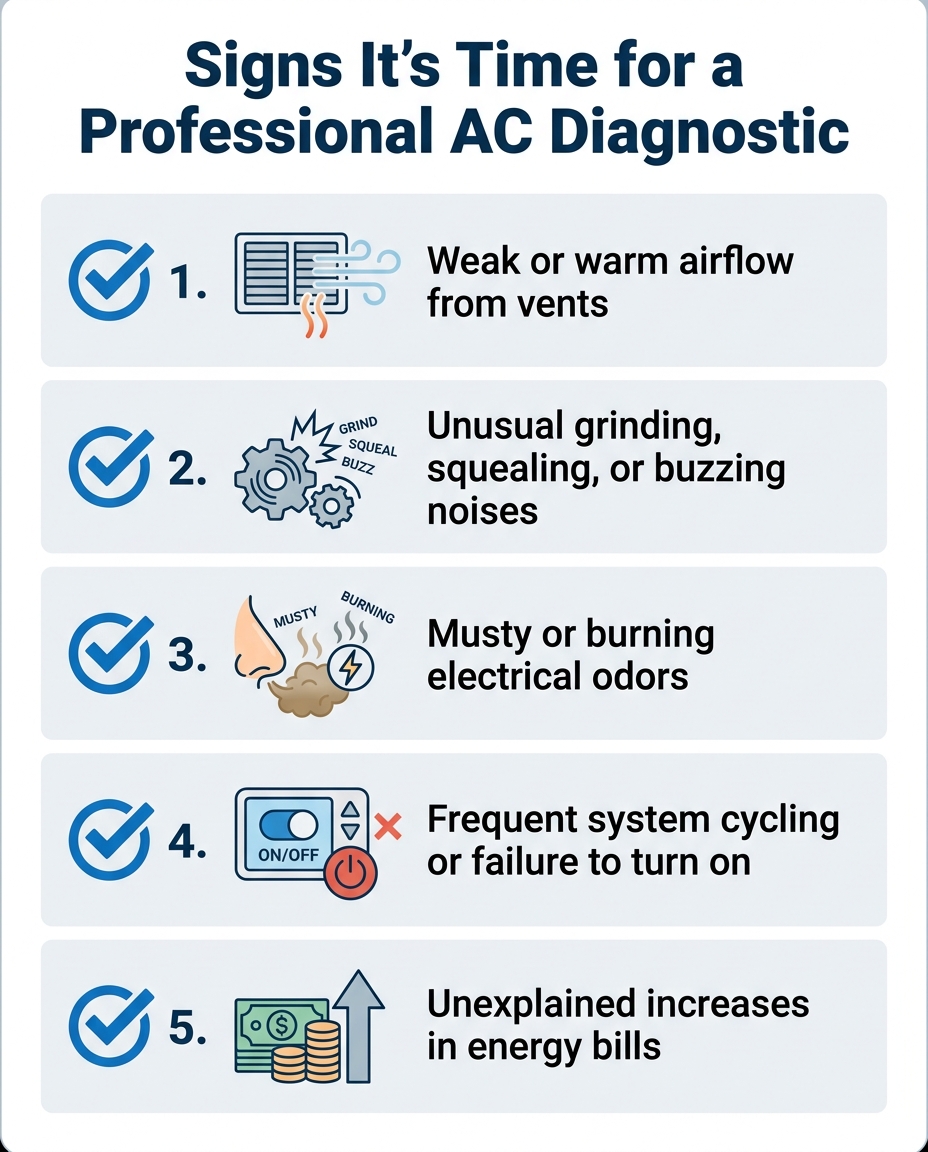
The most reliable signs that your AC needs repair include weak airflow, warm air blowing from the vents, and unusual noises like grinding or squealing. You may also notice sudden spikes in your energy bills or unpleasant odors circulating through your home. If the system struggles to reach the temperature set on the thermostat despite running constantly, a professional diagnostic is necessary to pinpoint the exact mechanical or electrical failure.
Why is my AC running but not cooling?
When an AC runs without cooling, it is typically due to severely restricted airflow from a clogged air filter or a significant drop in refrigerant levels due to a leak. Both issues prevent the evaporator coil from absorbing heat effectively, which can cause the coil to freeze solid. Once frozen, the system will continue to run and consume electricity, but it cannot lower the indoor temperature until a technician thaws the coil and resolves the root cause.
What is the most common AC repair?
The most common AC repair involves replacing failing electrical components, specifically the run capacitor or the contactor inside the outdoor condenser. These components endure immense electrical stress every time the system cycles on and off, making them prone to wear over time. Replacing a weak capacitor early prevents excessive strain on the compressor, which is why proactive diagnostics are highly recommended.
When should I call an AC technician?
You should call an AC technician the moment you notice a persistent drop in cooling performance, strange mechanical noises, or if the system begins short-cycling (turning on and off rapidly). Waiting for the system to fail completely often leads to more extensive and costly damage. Immediate professional intervention is required if you smell burning electrical odors or if the system repeatedly trips your circuit breaker.
Can low refrigerant cause my AC compressor to fail?
Yes, running an air conditioner with low refrigerant is highly damaging and can lead to complete compressor failure. The compressor relies on the cool refrigerant gas returning from the indoor coil to keep its internal motor from overheating. When refrigerant levels drop, the compressor runs significantly hotter and works much harder, eventually leading to burned-out electrical windings or seized mechanical parts.
How does a dirty evaporator coil impact cooling efficiency?
A dirty evaporator coil acts as an unwanted layer of insulation between the warm indoor air and the cold refrigerant inside the copper tubing. This barrier severely reduces the system's ability to extract heat and remove humidity from your home. As a result, the air conditioner has to run much longer cycles to achieve the desired temperature, causing a sharp decline in energy efficiency and accelerating wear on the entire system.
Restore Your Home's Comfort and Efficiency Today
Understanding the technical signs of system decline empowers homeowners to make smart, proactive decisions about their indoor comfort. Whether you are dealing with weak airflow, strange mechanical noises, or a system that runs constantly without actually cooling the house, recognizing these symptoms early is half the battle. Ignoring these warning signs during peak temperature spikes only leads to accelerated wear and tear, higher energy consumption, and the risk of a complete, sudden breakdown.
A professional diagnostic is the safest and most efficient way to restore your cooling system to factory specifications. Licensed technicians have the tools and training to accurately map refrigerant pressures, test high-voltage electrical loads, and ensure your equipment operates safely. Do not wait for a minor glitch to turn into a major emergency. Secure your home's comfort and schedule your comprehensive inspection for AC repair in Saskatoon before the severe weather arrives, ensuring you have a clear understanding of your system's health and the most efficient path forward.


Customer Testimonials
Hear what our satisfied customers have to say about their experiences with us.
I had my furnace decided to act up in the evening, of course. They sent out a tech that night and he was able to get to going till a new part could be installed the next day. The next time I need any work done, or service, this is who I am calling! Thanks again.
Dustin was excellent. Quickly diagnosed and corrected the problem I had with my furnace. Proactive and efficient worker with excellent communication. Took the time to see if I had any other questions or concerns. Highly recommend!!
I just had Dustin here to do a maintenance on air conditioner. He was so awesome and knowledgeable. I would absolutely recommend these guys to anyone. They also did my maintenance on furnace a year ago and was very good and professional at it. High recommend 5 star.
Great Job! Very pleased with the installation of our A/C unit. Installers were very professional - arrived on time, work area was cleaned up when they were finished, explained what they had done and ensured that we understood how the installation worked before they left.
Overall very good service, both after hours and during regular hours. Managed to schedule me in promptly to have my furnace replaced. The technicians mislabeled the zones on the thermostat, however overall very happy with the install. Will definitely be a returning customer.
they were sent on behalf of North Prairie Rentals. I was kept up to date and the gentleman that came was knowledgeable and friendly.
Had my water heater replaced. Carter had only been with the company for 6 months but proved to be very thorough and careful. He checked for gas leaks several times, readily replaced old parts and explained lighting procedure. I was very pleased with his workmanship.
Started with a furnace checkup which quickly turned into a discussion about a new furnace. Received an honest explanation of problems and reasons for purchasing a new furnace rather than fixing old one. Fast efficient service upon installation. Very happy with customer service!
My husband and I had Jason from Efficiency come out to fix a couple of gas leaks. We were very happy with the work he did. He was knowledgeable and took the time to answer all of our questions. We highly recommend! We will definitely be booking with Efficiency for our future needs due to Jason’s outstanding customer service!
We had a furnace installed recently. The guys at EH&C did a super job. They described how the install would go, answered all our questions, proceeded quickly and efficiently. Very pleased.