







Essential Guide to Choosing the Perfect Furnace Size for Your Saskatoon Home


Essential Guide to Choosing the Perfect Furnace Size for Your Saskatoon Home
Choosing the correct furnace size means matching a heating system's capacity (BTU output) to your home's actual heat loss so you get consistent comfort and efficient fuel use in Saskatoon's cold climate. This guide explains what "furnace sizing" is, why Manual J heat load calculations matter, how BTU needs vary with home type and insulation, and how AFUE influences operating cost. Readers will learn step-by-step sizing methods, sample BTU estimates for common Saskatoon home sizes, and how to weigh efficiency, ductwork, and thermostat compatibility when planning installation. The article also explains professional installation expectations, common pitfalls of rule-of-thumb sizing, and local considerations like peak winter temperatures and insulation variance. Professional furnace installation consultations are available for homeowners who want to apply this guide to their specific house; a sizing consultation is described later as the natural next step for accurate Manual J assessment.
Why Is Choosing the Right Furnace Size Crucial for Saskatoon Homes?
Choosing the right furnace size means matching heating capacity to heat loss so the system runs steadily and efficiently through Saskatoon's long, cold winters. Oversized units short-cycle and fail to dehumidify properly, while undersized units struggle to meet peak loads during extreme low temperatures, increasing runtime and potential wear. Proper sizing improves comfort consistency, lowers fuel consumption, and extends equipment life by preventing abnormal cycling and undue stress on components like the heat exchanger. Understanding these mechanisms prepares homeowners to prioritize accurate heat load calculations over simplified rules of thumb.
How Does Furnace Size Affect Home Comfort and Energy Efficiency?
Furnace size affects comfort by dictating runtime, temperature swings, and humidity control: correct sizing delivers steady heat and balanced humidity. When a furnace short-cycles because it is oversized, the blower runs in short bursts that reduce air mixing, create cold spots, and prevent proper humidity control, which reduces perceived comfort. Conversely, an undersized furnace runs continuously and may still fail at peak cold, driving higher fuel use and faster wear on the blower motor and gas valve. Recognizing these operational differences highlights why sizing is a technical decision linking BTU capacity, duct distribution, and thermostat control.
What Are the Risks of Oversized or Undersized Furnaces in Saskatoon’s Climate?
Incorrectly sized furnaces introduce tangible risks: safety, cost, and comfort trade-offs that are magnified in Saskatoon's coldest months. Oversized units can reduce combustion cycles and increase condensation in venting on non-condensing units, while undersized units can create frozen pipes and frequent cold indoor hours during extended cold snaps. Both scenarios increase maintenance frequency and can shorten component lifespans, particularly heat exchangers and blower motors. Assessing these risks clarifies why accurate Manual J load calculations, combined with inspection of ductwork and insulation, are essential before purchase.
How Do You Calculate the Perfect Furnace Size for Your Saskatoon Home?
Calculating the perfect furnace size requires a Manual J heat loss calculation that quantifies heat loss by room and assembles a total required BTU output for design-day conditions in Saskatoon. Manual J uses inputs—square footage, R-values for walls and attic, window types, orientation, air infiltration rates, and occupancy—to produce a defensible heat load rather than relying on per-square-foot rules. The result is a recommended heating capacity and a recommended range that informs selection of modulating, two-stage, or single-stage furnaces. Prioritizing Manual J reduces the risk of oversizing and reveals when duct upgrades or insulation improvements will lower required capacity.
Steps to get an accurate furnace size: Collect home data: Measure conditioned area, insulation levels, window types, and orientation. Estimate infiltration: Account for air leakage through walls and gaps. Run Manual J: Use industry-standard software or a qualified technician to calculate room-by-room loads.
This stepwise approach underscores why many local HVAC professionals recommend a site visit rather than an online calculator. Accurate inputs produce reliable outputs, and the next critical consideration is what Manual J specifically evaluates and why certified technicians are recommended.
What Is a Manual J Heat Loss Calculation and Why Is It Essential?
A Manual J heat loss calculation is the industry-standard procedure for estimating a home's heating load by summing room-by-room heat losses under design conditions. The calculation converts building attributes—insulation (R-values), window U-values, infiltration rates, and internal gains—into BTU/hr requirements so a furnace can be sized to meet peak load without oversizing. Manual J → calculates → heat load represents a clear semantic triple: it links the calculation method to the required capacity. Because Manual J accounts for Saskatoon's winter design temperature and specific home features, it reliably informs choices between furnace hyponyms like modulating or two-stage models and clarifies when ductwork or insulation upgrades will meaningfully lower required capacity.
How Do Saskatoon’s Climate and Home Insulation Affect Heat Loss?
Saskatoon’s long, cold winters and design-day low temperatures increase peak BTU demand compared with milder climates; insulation and air sealing can materially reduce that demand. For example, well-sealed modern homes with high attic and wall R-values will show significantly lower design loads than older, poorly insulated bungalows of equal square footage. This relationship—insulation quality → reduced heat loss → smaller required BTU capacity—means home improvements can be cost-effective prior to upsizing furnace capacity. Understanding local temperature extremes and conducting an inspection for insulation and infiltration are therefore essential preparatory steps before finalizing a furnace selection.
What Are the BTU Requirements for Furnaces in Saskatoon Homes?
BTU requirements express required heating output in BTU/hr and scale with home size, insulation, window area, and infiltration; correct estimation prevents both underperformance and wasted capacity. Rather than a single per-square-foot number, BTU needs vary by home type and insulation level; local examples help homeowners translate theory into practical numbers for 1,200–2,500 sq ft homes. Rough estimates are useful for initial budgeting, but they must be validated with Manual J to account for Saskatoon’s design temperatures and specific building characteristics. The table below offers localized example ranges by home type to guide early planning.
These ranges illustrate how insulation and construction era change required capacity; the table clarifies why a Manual J is the definitive next step. The following subsection shows worked examples to convert square footage into estimated BTU demand.
How to Estimate Furnace BTU Based on Home Size and Local Weather?
Estimating BTU begins with a per-square-foot multiplier adjusted for insulation: multiply conditioned area by the appropriate BTU per square foot and then adjust for design temperature differentials. For instance, a 1,800 sq ft well-insulated home using 30 BTU/sq ft would estimate ~54,000 BTU; a poorly insulated home at 45 BTU/sq ft would estimate ~81,000 BTU for the same area. These worked examples reveal why two similarly sized homes may need very different furnace capacities in Saskatoon. After producing a rough estimate, homeowners should pursue a Manual J to refine the number and to identify whether ductwork or air sealing can reduce the required BTU.
Can You Use a Furnace Sizing Calculator for Saskatoon Homes?
Online furnace sizing calculators can provide a rapid rough estimate but are imprecise because they typically use generic multipliers and omit detailed inputs like window U-values and infiltration rates. Calculators are useful for initial comparisons and budgeting, but Manual J is required for final equipment selection and for meeting warranty and insurance expectations in many cases. An online tool can function as a lead-generation engagement step, but the responsible path is to follow its estimate with a professional Manual J assessment to confirm sizing and to identify efficiency opportunities.
How Does Furnace Efficiency Influence Your Heating Costs in Saskatoon?
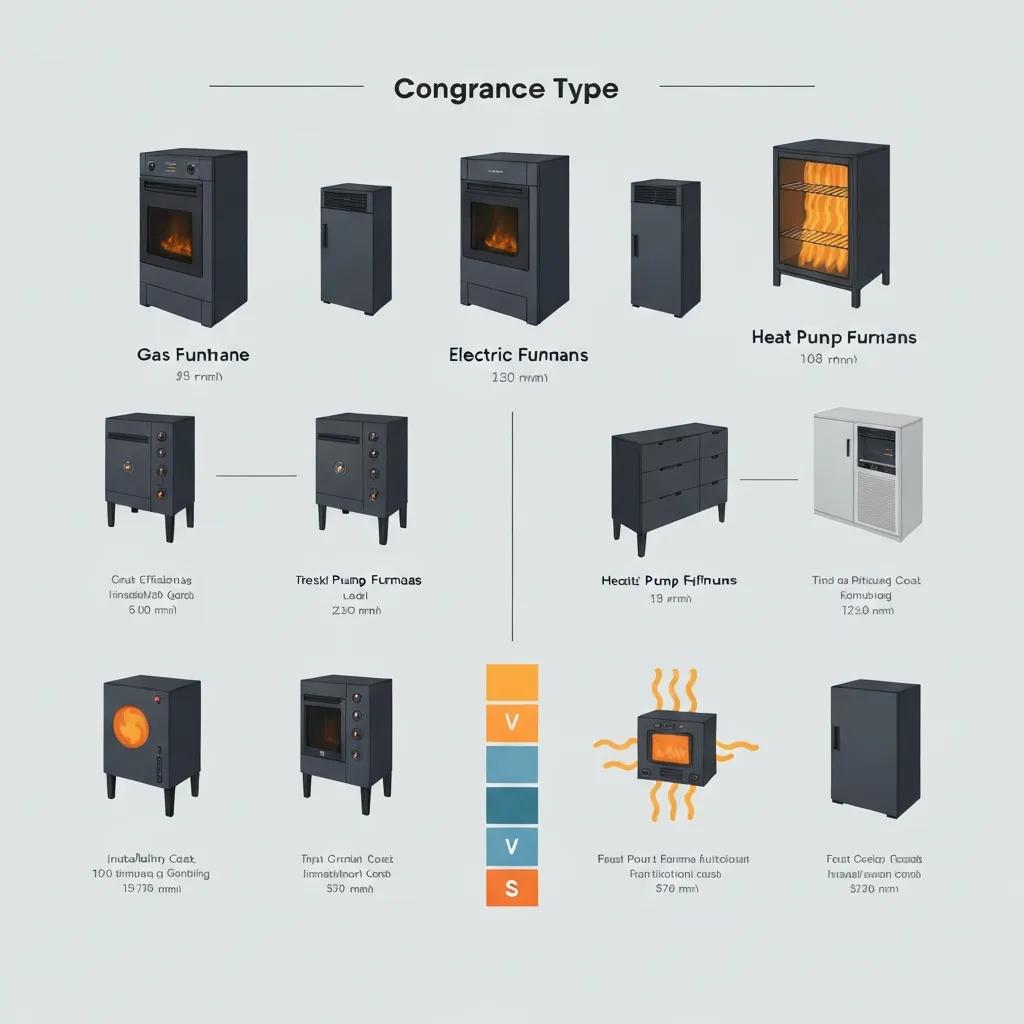
Furnace efficiency, expressed as AFUE (Annual Fuel Utilization Efficiency), describes the percentage of fuel energy converted to heat delivered to the home; higher AFUE means less fuel wasted in exhaust or standby loss. In Saskatoon’s cold climate, higher AFUE yields larger absolute fuel savings because the system runs longer and uses more fuel across the heating season. Choosing between furnace hyponyms—high-efficiency condensing, modulating gas, two-stage, or single-stage—affects upfront cost, expected savings, and payback period. The table below compares furnace types, AFUE ranges, and typical operating impact to help homeowners evaluate trade-offs.
This comparison demonstrates that incremental AFUE gains translate into measurable annual savings in harsh winters, and the next subsection explains AFUE and technology choices in more detail.
What Is AFUE and Which Furnace Types Offer the Best Ratings?
AFUE indicates the proportion of fuel energy converted to heat; for example, a 95% AFUE furnace converts 95 units of fuel into 95 units of heat, losing 5 units to exhaust and standby. Condensing, modulating gas furnaces typically reach the highest AFUEs (95–98%) by recovering latent heat from exhaust via secondary heat exchangers. Two-stage furnaces improve part-load efficiency and comfort relative to single-stage models and often offer AFUE in the low-to-mid 90s. Considering AFUE alongside features like variable-speed blowers and modulating gas valves clarifies long-term operating cost differences and payback timelines.
How Do High-Efficiency Furnaces Save Energy in Harsh Winters?
High-efficiency furnaces save energy through technical mechanisms: condensing heat exchangers recover latent heat from combustion exhaust, and variable-speed blowers reduce electric consumption and maintain more even airflow. Modulating gas valves allow output to match heat load closely, reducing cycling losses and improving comfort in lower-load periods. These mechanisms translate into percent savings versus lower-AFUE units; in Saskatoon, extended run hours magnify those savings across the heating season. Maintenance considerations such as condensate management and filter care are important to preserve high-efficiency performance over time.
What Should You Expect During Furnace Installation and Professional Consultation?
A professional furnace installation begins with a detailed pre-installation assessment that includes a Manual J heat load, ductwork inspection, and verification of venting and thermostat compatibility. The installation process typically follows with removal of the old unit, placement and securement of the new furnace, connection of gas and venting systems where applicable, and system commissioning including AFUE verification and thermostat calibration. Post-install commissioning ensures correct airflow, combustion parameters, and that safety controls are functioning; this step validates performance and preserves warranty eligibility. Preparing your home and understanding the timeline reduces surprises and ensures a smooth handover to regular maintenance.
Typical installation and consultation steps homeowners should expect: Pre-install inspection and Manual J: Site data collection and load calculation. Ductwork and venting evaluation: Seal, size, or modify ducts as needed. Commissioning and homeowner walkthrough: System testing and controls orientation.
These steps highlight why professional involvement matters and lead naturally to the recommendation that homeowners book an expert sizing consultation to confirm recommendations and costs.
For homeowners who want a professional Manual J assessment or a tailored installation plan, Efficiency Heating and Cooling can perform site evaluations and provide a detailed sizing consultation and estimate. Booking a sizing consultation is the recommended next step for anyone who needs a defensible capacity recommendation and a clear installation scope.
Why Is Professional Furnace Sizing and Installation Important in Saskatoon?
Professional sizing and installation ensure safety, accuracy, and performance in a cold-climate context where mistakes are costly and uncomfortable. Certified technicians apply Manual J standards, inspect ductwork meronyms such as the heat exchanger and blower motor, and verify ventilation and combustion safety—tasks that generic online tools cannot replicate. Proper installation also affects warranty coverage and long-term reliability because manufacturers often require professional commissioning. Recognizing the difference between a quick estimate and a full professional assessment helps homeowners prioritize long-term value over short-term savings.
How Do Ductwork and Thermostat Compatibility Affect Furnace Performance?
Ductwork integrity and proper thermostat selection are critical system elements that influence delivered heat and measured efficiency: leaky or undersized ducts waste energy and mask the true performance of a correctly sized furnace. Smart thermostats and zoning controls can optimize runtime and reduce fuel use by matching delivery to occupied zones and by leveraging scheduling and adaptive setbacks. Simple measures—duct sealing, ensuring return paths, and choosing a compatible thermostat—can improve comfort and reduce the required capacity, making duct and control upgrades an important part of the sizing conversation.
How Do You Choose the Right Furnace Brand and Manage Installation Costs in Saskatoon?
Choosing a furnace brand involves evaluating AFUE, feature set (modulating vs two-stage), warranty terms, and the local service network that supports parts and maintenance. Lifecycle cost analysis—combining installed cost, expected fuel use, and projected maintenance—helps compare models beyond sticker price. Financing options, phased upgrades (duct sealing first, furnace later), and local incentives can all alter payback and affordability. The table below offers a simplified comparison of hypothetical brand/model attributes to illustrate how capacity, warranty, and installed cost range interplay; homeowners should seek tailored recommendations and precise cost estimates before committing.
This table clarifies trade-offs; homeowners should request tailored quotes because installed costs vary with required venting, ductwork, and control upgrades. If you want a cost estimate specific to your home, contact Efficiency Heating and Cooling for tailored recommendations and an installation estimate.
What Are the Top Furnace Brands Recommended for Saskatoon’s Climate?
When evaluating brands for Saskatoon, prioritize models with reliable condensing technology, good low-temperature performance, and a robust local service network to ensure parts and support are available. Key attributes to consider include modulating capability for load matching, durable heat exchangers for longevity, and compatible controls that support smart thermostats and zoning. Rather than relying solely on brand reputation, assess specific model performance data, warranty details, and the responsiveness of local service providers. These selection criteria reduce lifecycle risk and improve long-term comfort across harsh winter seasons. For professional assistance, consider furnace installation options.
Are There Local Rebates or Incentives for High-Efficiency Furnace Installation?
Rebates and incentives can materially improve payback for high-efficiency furnaces by lowering upfront cost or providing rebates for qualifying efficiency upgrades such as condensing units and duct sealing. Eligibility often depends on equipment AFUE, proof of professional installation, and sometimes pre- and post-inspection or test-in/test-out verification. To pursue incentives effectively, document the Manual J, equipment specifications, and installer commissioning report to support rebate applications. Understanding available programs and eligibility requirements helps homeowners incorporate incentives into the lifecycle cost analysis and final decision.
Key actions to pursue rebates: Verify program eligibility: Check efficiency thresholds and documentation requirements. Document professional work: Keep Manual J reports and commissioning records. Submit rebate paperwork promptly: Meet application deadlines and inspection requests.
These steps help homeowners maximize available incentives and bring down effective installed costs for high-AFUE systems, making higher-efficiency choices more financially attractive.


Customer Testimonials
Hear what our satisfied customers have to say about their experiences with us.
I had my furnace decided to act up in the evening, of course. They sent out a tech that night and he was able to get to going till a new part could be installed the next day. The next time I need any work done, or service, this is who I am calling! Thanks again.
Dustin was excellent. Quickly diagnosed and corrected the problem I had with my furnace. Proactive and efficient worker with excellent communication. Took the time to see if I had any other questions or concerns. Highly recommend!!
I just had Dustin here to do a maintenance on air conditioner. He was so awesome and knowledgeable. I would absolutely recommend these guys to anyone. They also did my maintenance on furnace a year ago and was very good and professional at it. High recommend 5 star.
Great Job! Very pleased with the installation of our A/C unit. Installers were very professional - arrived on time, work area was cleaned up when they were finished, explained what they had done and ensured that we understood how the installation worked before they left.
Overall very good service, both after hours and during regular hours. Managed to schedule me in promptly to have my furnace replaced. The technicians mislabeled the zones on the thermostat, however overall very happy with the install. Will definitely be a returning customer.
they were sent on behalf of North Prairie Rentals. I was kept up to date and the gentleman that came was knowledgeable and friendly.
Had my water heater replaced. Carter had only been with the company for 6 months but proved to be very thorough and careful. He checked for gas leaks several times, readily replaced old parts and explained lighting procedure. I was very pleased with his workmanship.
Started with a furnace checkup which quickly turned into a discussion about a new furnace. Received an honest explanation of problems and reasons for purchasing a new furnace rather than fixing old one. Fast efficient service upon installation. Very happy with customer service!
My husband and I had Jason from Efficiency come out to fix a couple of gas leaks. We were very happy with the work he did. He was knowledgeable and took the time to answer all of our questions. We highly recommend! We will definitely be booking with Efficiency for our future needs due to Jason’s outstanding customer service!
We had a furnace installed recently. The guys at EH&C did a super job. They described how the install would go, answered all our questions, proceeded quickly and efficiently. Very pleased.